 The Mahoning Valley has several choices for continuing education – Youngstown State University and Kent State University regional campuses offer college access and there are also several technical colleges in the area. However, the rising cost of tuition can be a deterrent. Jefferson Community College of Steubenville saw the need for a more affordable college choice and now there is one; Eastern Gateway Community College With just one full semester in the books, Eastern Gateway Community College can already tout its success. Serving Mahoning, Trumbull and Columbiana counties, this expansion of Jefferson Community College is thriving. Continue reading
Fall’s Final Hurrah
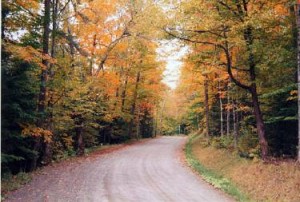
Mill Creek MetroParks pulls out all the stops in celebration of autumn, and you’re invited. Winters can be tough in Y-town and the MetroParks make the most of the fabulous fall weather that precedes the first snow fall.
The changing fall foliage might be a tourist attraction in New England, but Mill Creek Park can be just as impressive. Put on your walking shoes and take advantage of the wonderful seasonal show Mother Nature presents. The MetroParks offers numerous interpretive walks during the month of October. These walks are slow-paced so time can be taken to not only gain information about the walk’s topic but so everyone can enjoy the scenery. Continue reading
Pedaling with a Purpose
Pedaling with a Purpose – Califorkids Trip Nears Completion
 Community service is always in style. How to go about doing it is limited only by one’s imagination. Take Scott Finamore, for example. About a year ago this 23 year old Poland, Ohio native tossed an idea at his buddy 19 year old Sam Malaska of Youngstown. Finamore was in need of an adventure, (“I’m an outdoors kind of guy,” he states), so he proposed a bike trip. But not just any bike trip. “I thought it would be neat to ride out to California to visit people I know there and in the process really see America.” Malaska thought Finamore was nuts – at first; but once he kicked the idea around, Malaska was on-board. Continue reading
Free Music in Y-Town Abundant this Summer
Free Music Abundant this Summer
Staycations are all the rage as many buckle down on excessive spending by forgoing the big, expensive out-of-town summer get-away. But does staying close to home mean the next three months will be boring. Not a chance. For music lovers, there’s no place like home in the Mahoning Valley. The number of free concerts taking place will keep many a toe tapping.
The W.D. Packard Concert Band, the Pride of Warren since 1955, will be busy through August keeping big band buffs happy. All concerts are free and open to the public courtesy of the W.D. Packard Trust. The following is the schedule for the W.D. Packard Concert Band with all concerts taking place at the South Lawn band shell unless noted. Continue reading
Mill Creek MetroParks Summerfest Spectacular
Mill Creek MetroParks Summerfest Spectacular also offers up some wonderful musical opportunities. And yes, it’s all free. All concerts take place at the Judge Morely Pavilion with each beginning at 7:00 p.m. The variety of music presented guarantees there will be something for everyone! Be sure to bring a lawn chair, bug spray and a smile! On tap for the 2009 Summerfest Spectacular are… Continue reading
Chevy Centre to Get New Name
Come June 1, 2009, the Chevy Centre will have a new name – The Covelli Centre – thanks to a the naming rights contract accepted by the centre from Covelli Enterprises – a three year deal for $120,000 annually. Sam Covelli, president and chief executive officer for Covelli Enterprises is best known by those in the Valley as the man who brought Panera Bread and O’Charley restaurants to the area. GM’s financial hardships resulted in their not renewing the naming contract with the centre, so a new sponsor was needed, and Covelli won the honor. Continue reading
Caring for Our Community
 Y-Town’s area teenagers plan to make a difference this April 25, 2009, known as Global Youth Service Day. The United Way has partnered with Hands On Volunteer Network of the Valley this year to provide an opportunity for area youth groups to put their communities first. The United Way Youth Service Day of Caring sponsored by Farmers National Bank is an annual community service project where groups of area high school students, scout troops, church youth groups and the like take on tasks, odd jobs and anything else that might need taken care of to help area nonprofit agencies.
If it needs done, these kids are willing to take on the task be it cleaning, painting, weeding, and everything in between including stuffing envelopes in an office setting to making and serving meals to the needy at area shelters. The registration form is written so groups can volunteer for areas they feel most comfortable with including – Fix-Up (indoor or outdoor cleaning or painting, landscaping, moving and window washing); Administrative (bulk mailings, computer help or assembly of printed material); Food/Clothing (meal prep and serving, food packaging and storing or clothing sorting and organizing) and Person-to-Person (arts and crafts or activities for children, teens or the elderly). The non-profit agencies these groups help get their services from 8:00 a.m. to 1:00 p.m. meaning much can be accomplished.
The United Way established this program in an effort to expose the youth of the Mahoning Valley to the importance of volunteering. In doing so, these teens help the area United Way agencies complete needed projects. In the process, not only do the students gain a respect for what the United Way tries to accomplish, but by working within their own groups and with others, the children get to experience the fact that working together they indeed can make a difference in their community. And though the tasks taken on can be labor-intensive, the students also realize hard work can be satisfying, especially when one steps back and sees what’s been accomplished.
Though the deadline to register your group in order to participate this year was April 1, visit the Youth Day of Caring website at www.ymvunitedway.org and find out how your group can participate next year. And come Saturday, April 25, if you happen to see a group of kids doing some good, give a shout-out and let them know it’s appreciated!
Contact information:
Debbie Oliver
United Way of Youngstown and the Mahoning Valley
255 Watt Street
Youngstown, OH 44505
Phone: 330-746-8494 Fax: 330-746-4525
E-mail: [email protected]
Website: www.ymvunitedway.org
On the Road Again
On the Road Again The National Road Comes to Y-Town
Our nations’ first federally funded highway is celebrating its bicentennial, and you’re invited to the party. The National Road: Helping Build America is a traveling exhibit whose next stop is the Youngstown Historical Center of Labor & Industry where it sill be on display April 7 through June 28, 2009.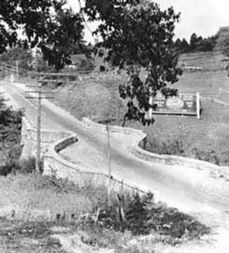
Put together by the Ohio Historical Society and partially funded by a grant from the Ohio Humanities Council, this exhibit honors Congress’ authorizing the construction of the National Road also known as the Cumberland Road, the National Pike, “The Main Street of America” and U.S. 40. The National Road was the first compact gravel road to cross the Appalachian Mountains making it so travel through this area was more doable. With the construction of The National Road, settling the frontier became a reality.
Though Congress gave the okay to begin the construction of the road in 1806, and contracts with private builders were in place by 1811, the War of 1812 held the project in limbo until 1815. At this time, work on the road began in Cumberland, Maryland with the first portion to Wheeling, Virginia (now West Virginia) being completed in 1817. The road eventually extended to St. Louis, Missouri. It is interesting to note that the Ohio portion of the 620-mile National Road is more than 225 miles long and traverses through 10 different Ohio counties.
The history of The National Road shows Ohio was to become a state in 1803 and congress promised in 1802 to build a road connecting areas east of the Appalachian Mountains to the land that was to become Ohio. Up until this time, the Nemacolin’s Path, a Native American trail named after the Delaware Indian chief, Neamcolin was the “road” used to help people in the Northwest Territory to cross the Appalachian Mountains. With the National Road in place, the ability to settle this Ohio frontier was made easier, as was communication between this area and those on the East Coast.
The National Road: Helping Build America relies on wonderful graphics to tell the story of this landmark road through the eyes of a traveler of this era. Those visiting the exhibit will not only learn how this road came to be, but how it helped with westward expansion, and how it continues today as a travel destination. Such is its importance to the development of the United States during the 19th and early 20th centuries; in 2002 the United States Department of Transportation designated this byway an “All-American Road” in the “National Scenic Byway System.”
The exhibit has been on display appearing at venues along Route 40 since 2007 and is now making its way to other Ohio Historical Society stops in 2009 so more may learn about this important Ohio landmark.
The Youngstown Historical Center of Labor & Industry is open Wednesday through Friday 10:00 a.m. to 4:00 p.m.; Saturday and Sunday (as well as Memorial Day and Labor Day)- noon to 4:00 p.m. Admission is $7 for adults; $3 for children 6-12 and children under 5 are free. Call 1-800-262-6137 for more information.
The Youngstown Historical Center is located at 151 W. Wood Street in Youngstown, Mahoning County. Wood Street is located between Wick Avenue and Fifth Avenue. It is one block north of downtown and two blocks south of Youngstown State University.
Spring Has Sprung – Time to Get Moving
 Tired of being cooped up for the past four months, mug of hot coffee in hand, waiting for that first sign of Spring? Wait no more! April is here and with it comes fair weather, warm temps and the opportunity to brush off those sneakers and get moving.
The Mahoning Valley offers plenty of opportunities to get our and get going. Bike, walking and running trails a-wait. Nature walks, hiking excursions, group sports – all are available to people ready to enjoy the spring-time weather and get ready for an action-packed summer.
Enjoy!
It’s hard to beat the jewel of the area – Mill Creek Metroparks – and what they have to offer. Visit their website at www.millcreekmetroparks.com and sign up for their monthly email detailing everything from bird-watching events to kayaking trips. If a person just took advantage of the opportunities this one park offers throughout the year, there would be no need for a costly health club membership.
While Mill Creek has a great deal to offer, don’t miss out on the other parks and nature areas in the Mahoning Valley region. There are numerous small community parks where biking, walking and running venues await. The Austintown Township Park (6000 Kirk Rd., Austintown – 330-799-6989) is a wonderful smaller park that offers everything from a metered walking trail and nature trails to the unique Braille trail; a guided trail for the visually impaired.
After a long day of yard work, why not grab a fishing pole and head to Mosquito Lake State Park (1439 State Route 305, Cortland – 330-637-2856, park office). Dip your line into the park’s 7,000+ acre lake and see what you can reel in. There is also a campground here for those who want to spend the night, as well as miles of hiking and bridle trails.
If biking is your forte, then Y-Town and its surrounding communities aim to please. The neighboring county of Columbiana offers the Little Beaver Greenway Trail; 11 miles of paved space created from the former Erie Lackawanna Railroad line. Glorious views of the wild and scenic Little Beaver Creek can be enjoyed while traveling this trail that runs from Lisbon to Leetonia.
The 10 mile Stavich Bike Trail runs through Mahoning and Lawrence (PA) counties beginning in Struthers and Lowellville, Ohio and traversing through to New Castle, PA. Those who use this trail will get to view the revitalized and now thriving Mahoning River.
Parking for the MetroParks Bikeway of Mahoning County can be had at the MetroPark’s Farm (a wonderful place to visit, as well) or at the Kirk Rd. Trailhead in Austintown. This newer trail runs from Western Reserve Rd. to the border of Trumbull County.
And if all this information about biking has inspired you to take on this activity full-force, consider joining the Out-Spokin’ Wheelman Bicycle Club; a recreational cycling club with members from Mahoning, Trumbull, Columbiana, and Lawrence counties. With more than 500 members making up this group, those who join will not only get the benefit of numerous biking excursions (both on and off-road), members also enjoy hiking, canoeing, and in the winter – cross-country skiing, sledding and skating. Visit the club’s website at www.outspokinwheelmen.com for more details. Be sure to read the club’s info-filled monthly newsletter “Fresh Air” to get the lowdown on all the great biking opportunities this group offers.
The Great Outdoors is Calling
Yes, the weather outside is frightful, but hey it’s January and you live in Ohio for Pete’s sake! So what’s a person to do? Lots as a matter of fact. Get off that coach; the movie channel can wait. Head outside and take advantage of what Youngstown has to offer in the dead of winter. Here’s hoping the roads are salted and you don’t forget your mittens!
What could be more fun than the Three Winter S’s – sledding, skating and skiing? While there are plenty of backyard hills and farm ponds to be had in Mahoning County, get together with friends or make some new ones at these great community gathering places.
With Flexible Flyer in tow, head to the James L. Wick Recreation Area in Mill Creek Park (Youngstown – 330-740-7107) for some awesome sledding experiences. Know that evening sledding is doable thanks to the outdoor lighting and there is a heated shelter available once the winter chill becomes a bit intense. The concession stand is also an added bonus. What’s a good day of sledding without a couple hot cocoas to keep you going?
Ice skating is another winter pastime staple. If you’d like to skate outdoors, make your way to the Courthouse Square Park Ice Rink in downtown Warren (330-841-2641). This man-made ice rink is open during the winter. For those who prefer to skate indoors, the Ice Zone in Boardman (330-965-1423) is the place to go. Two ice rinks are maintained here in the winter (one is open in the summer as well) with learn-to-skate and hockey programs available as well as public skating. Call ahead for public skate times.
Cross-country skiing continues to grow in popularity, especially since hills are not required. Any number of municipal parks permit cross country skiing including Boardman Township Park (Boardman – 330-726-8105) – on the bike and walking trails; Mosquito Lake State Park (Trumbull County – 330-637-2856) – the park office offers trail maps detailing the marked skiing areas.; Roosevelt Park (Campbell – 330-743-5370) permits self-guided skiing as does Mill Creek MetroParks (Youngstown 330-702-3000).
If you want to hit the slopes for some downhill thrills, you might want to join one of the two very active skiing clubs in the Youngstown area. The Youngstown Ski Club does require a membership though one-day ski trips for non-members are available. For information about this group and their skiing opportunities, visit their website at www.youngstownskiclub.org The Warren Ski Club also host skiing adventures as well as monthly meetings for both current members and those interested in joining. Find out more about this group’s activities at www.warrenskiclub.org
Pick your passion and make use of what Youngstown’s winter weather has to offer. Who needs Jackson Hole, Wyoming or Aspen, Colorado – okay, those would be great places to visit – but for little money, a great deal of fun can be had right here in Y-Town. Now bundle up and get out there; but be sure to use the bathroom before you put on your snowsuit!